
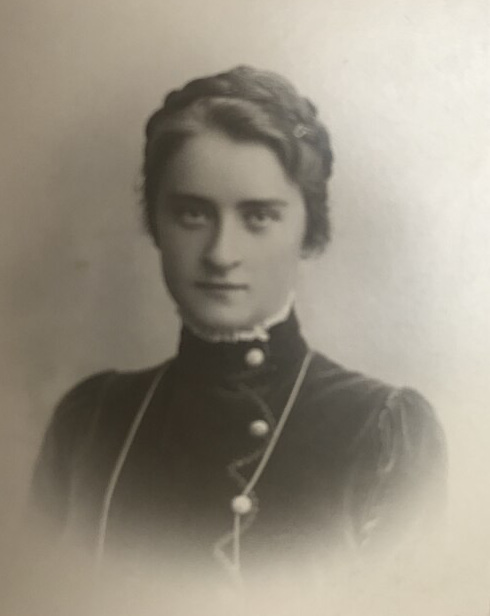
Surprisingly, perhaps, the short answer is yes. In her 1919 paper, Kirstine Smith shows that the number of large plaice increased markedly during the war years. This was not because individual fish suddenly grew faster, but because large fish became more common in the population, following a sharp reduction in fishing activity due to the war.
The effect of World War I on the Eastern North Sea was profound, leading to a halving in plaice catch during the war years. Fishing vessels were requisitioned for military purposes, fishermen themselves were called to active combat, oil shortages affected fishing vessels, and fishing zones were restricted due to minefields. From an economic standpoint, the fishing industry also faced major disruption, with disturbances to normal markets and sharp increases in plaice price
This reduction in plaice caught was not distributed equally, with some areas, such as the coast off the South-West of Denmark, seeing reductions of up to one third of typical yield. This created something rarely observed in practice: a large-scale, unintended experiment on the impact of fishing activity on fish populations. Questions about how fishing affects fish stocks had been raised for centuries, but without real-world variation of this kind, they remained largely theoretical.
The impact of the war on Danish plaice fishing varied greatly throughout the war. In the first month after the outbreak, international exportation of plaice was abruptly stopped, leading to a drop in prices, with a slight recovery later in the year. Total yield in 1914 was around 6 million kilograms, compared to approximately 9 million in 1912 and 1913. By 1915, export conditions improved, demand increased, and yields reached 9.8 million kilograms: a record. This demand also altered fishing practices: fisheries began landing dead plaice during summer months, storing them on ice aboard vessels. By 1916, although fewer plaice were bought by German markets, prices rose significantly. Despite only 5.8 million kilograms being landed, revenues reached around 58 million Danish Krone, compared to roughly 17 million in pre-war years. In 1917 and 1918, severe restrictions, particularly due to minefields and reduced access to fishing areas, led to dramatic declines, with yields falling to 2.2 and 2.9 million kilograms respectively.
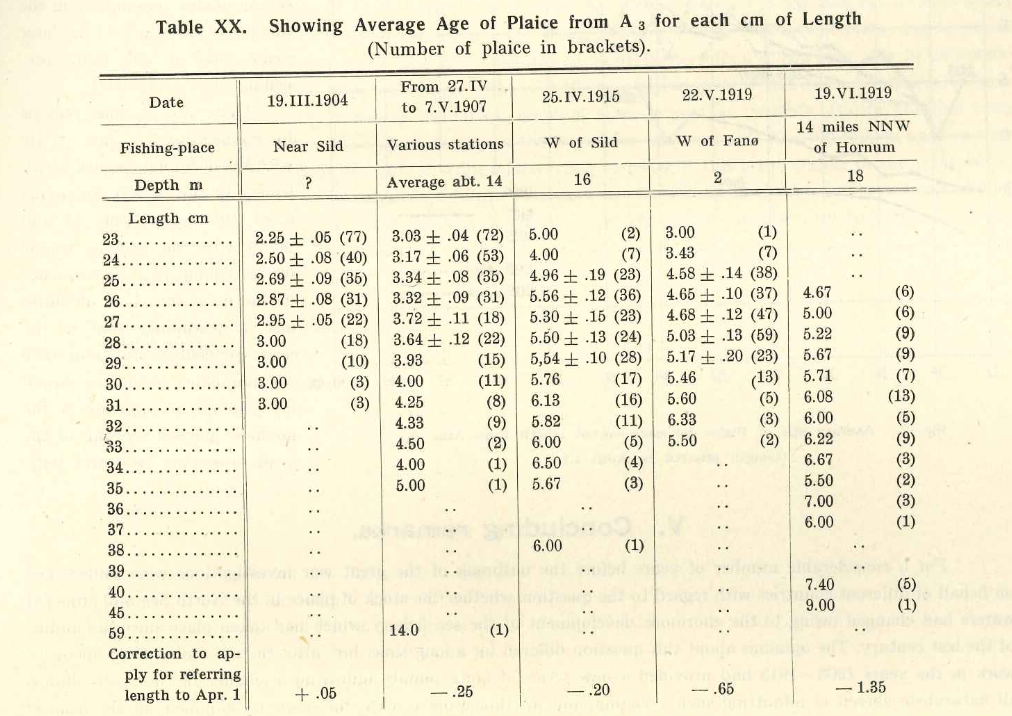
All that data was collected, but it was very complex, and only a statistician thinking out of the box would see that as a treasure: Smith. Smith used this unexpected, and uncontrolled experiment to answer questions that, until previously, had only been hypothesised about. For example, during the London June 1913 ICES Plaice Committee meeting, fishery scientists agreed about the theory that the intensity of fishing would be linked to the change in stock of plaice. The innovation of Smith’s conclusions was not merely thanks to the “luck” of having that data. Rather, her true breakthrough was driven by her rigorous statistical background acquired during her doctorate at UCL. She applied multiple statistical approaches to untangle the problem. She compared the data across several years, to contextualise it. Moreover, Smith looked at the size of fish in each age bracket. Additionally, Smith did not measure the growth of individual fish specimens, but rather looked at various groups of plaice. In essence, this allowed her to perform statistical analysis because she was dealing with subsets of the plaice population and not merely examining one fish at a time. With these approaches, Smith was able to analyse the overall change in plaice population structure. Tackling and working with real-world and imperfect data proved, by isolating the effects of various characteristics, to be an early example of inference.
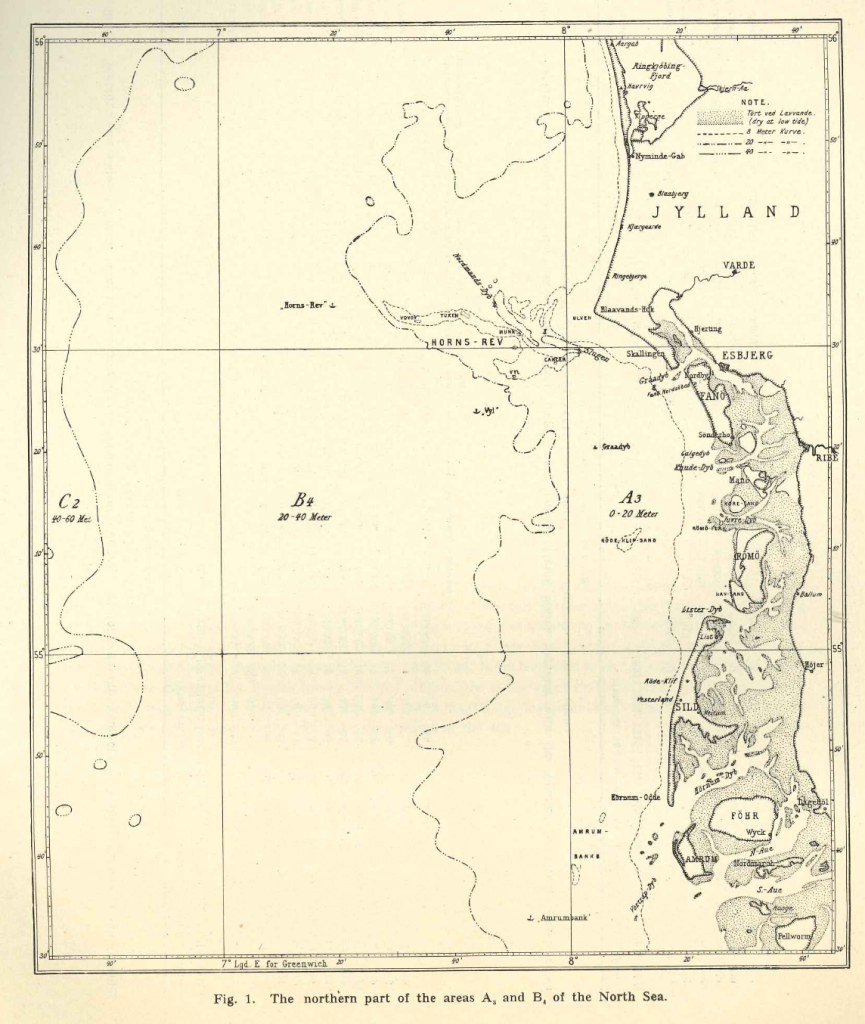
So, to summarise, did World War I really make fish bigger? Well… for a start Smith investigated only plaice and in the Eastern North Sea, so that is the only population that conclusions can be drawn from. Overall, though, the lack of fishing, amongst other factors, led to an increase in the proportion of large plaice, although the individual growth of each plaice slowed during the war. Hence, in fact, the size of each fish did not increase, nor did each fish grow more rapidly, however, there was an increase in frequency of larger plaice, due to a composition shift and increase in frequency of older plaice. These findings did confirm previous hypotheses of the effects of reduced fishing pressure.
Sources
Johansen, A.C. and Smith, Kirstine. “Investigations as to the effect of the restriction on fishing during the war on the plaice of the Eastern North Sea”. Meddelelser fra Kommissionen for Havundersøgelser, Serie: Fiskeri 5, no. 9 (1919): 3-48.
Author
Celia Decoudu, VIP: History, Mathematics, and the Public (2025-2026, Semester 2)